
If you’ve ever felt overwhelmed trying to pick individual stocks or figure out which mutual fund manager actually knows what they’re doing, you’re not alone. This is exactly why index funds have quietly become the default choice for millions of everyday investors, and 2026 has been a landmark year for them.
In fact, just last month, the Vanguard 500 Index Fund ETF (VOO) became the first exchange-traded fund in history to cross $1 trillion in assets under management. That’s not a fluke. It’s proof that a growing number of people are choosing simplicity, low costs, and consistency over trying to beat the market.
In this guide, we’ll break down what index funds actually are, how they work, why they’ve become so popular, and how you can start investing in them today — even if you’ve never bought a single share of anything before.
What Is an Index Fund?
An index fund is a type of investment fund designed to mirror the performance of a specific market index, rather than trying to outperform it.
Think of a market index — like the S&P 500 — as a scoreboard tracking the combined performance of 500 of the largest U.S. companies. An index fund simply buys shares in all (or most) of those same companies, in roughly the same proportions, so its performance moves in step with that scoreboard.
This approach is called passive investing, and it’s the opposite of what a traditional actively managed mutual fund does. Instead of paying a fund manager to research and hand-pick “winning” stocks, an index fund just replicates the market as it stands.
Here’s why that matters:
- You get instant diversification across dozens, hundreds, or even thousands of companies
- You avoid betting your money on one manager’s judgment
- You pay dramatically lower fees, since there’s no expensive research team involved
How Index Funds Work
Understanding the mechanics behind index funds helps explain why they’ve become so trusted.
How to Open a Fidelity Roth IRA
Fractional Ownership Across Hundreds of Companies
When you invest in an index fund, you’re not buying shares of one company. You’re buying a tiny slice of every company included in that index. If you invest in an S&P 500 index fund, your money is spread across Apple, Microsoft, Nvidia, Amazon, and roughly 496 other large U.S. businesses, all in one purchase.
Replication Strategies
Fund managers use one of a few methods to track an index:
- Full replication — buying every single stock in the index at the exact same weighting
- Sampling — buying a representative subset of stocks when full replication is impractical (common for very large or illiquid indexes)
Tracking Error: The Small Gap You Should Know About
No index fund matches its benchmark perfectly. The tiny difference between a fund’s actual return and the index’s return is called tracking error. It’s usually caused by fund fees, cash holdings, or timing differences when the index rebalances. A well-run index fund keeps this gap extremely small — often just a few hundredths of a percent per year.
Index Funds vs. Active Mutual Funds
This is where the debate really comes down to numbers, not opinions.
Cost Structures
Actively managed funds employ research teams, analysts, and portfolio managers, and all of that costs money. That cost gets passed to you through the expense ratio — an annual fee charged as a percentage of your investment.
- Actively managed funds often charge 0.5% to 1.5% per year, sometimes more
- Core index funds tracking major benchmarks now charge as little as 0.02% to 0.05% per year
On a $50,000 portfolio, that difference alone can save you hundreds of dollars every single year — money that stays invested and keeps compounding instead of going into someone else’s pocket.
Historical Performance Comparison
The numbers here are hard to ignore. According to the mid-2026 update of the S&P Dow Jones Indices SPIVA Scorecard, 79% of active U.S. large-cap fund managers underperformed the S&P 500 over the period studied. Zoom out further, and it gets even more lopsided: over a trailing 10-year period, only about 24% of actively managed funds managed to beat their benchmark index.
This isn’t a one-year anomaly — it’s a pattern that has repeated for decades. It’s also the core reason Warren Buffett has consistently told everyday investors that a low-cost S&P 500 index fund is one of the smartest long-term wealth-building tools available to them.
How to Invest in Index Funds
Getting started is far simpler than most people expect.
Step 1: Open a Brokerage Account
You’ll need a brokerage account (or a retirement account like a 401(k) or IRA that offers index fund options). Most major brokerages now offer commission-free trading on ETFs and index mutual funds.
Step 2: Decide on Your Asset Allocation
This means deciding how to split your money between stocks, bonds, and possibly other assets based on your age, goals, and risk tolerance. A common starting approach:
- Younger investors with a long time horizon often lean heavily into stock index funds
- Investors closer to retirement typically add more bond index funds to reduce volatility
Step 3: Set Up Automated, Recurring Investments
This is where dollar-cost averaging (DCA) comes in — investing a fixed amount on a regular schedule (say, every payday) regardless of whether the market is up or down. Over time, this smooths out the impact of short-term price swings and removes the temptation to “time the market.”
A Real-Life Example
Let’s say Sarah, a 29-year-old marketing coordinator, decides to invest $300 every month into a broad-market index fund through her Roth IRA. She doesn’t check her account daily, doesn’t try to guess when to buy or sell, and doesn’t panic when the market dips 10% one quarter.
Instead, she keeps her automatic deposit running. Over the following years, some months she buys shares when prices are high, and some months when prices are low — but on average, her cost per share stays reasonable. This is dollar-cost averaging in action, and it’s exactly the kind of low-effort, high-discipline strategy that has made index investing so popular with people who don’t want investing to become a second job.
Best Index Funds to Consider (Benchmark Comparison)
Not all index funds track the same thing, and the benchmark matters.
- S&P 500 Index Funds — Track the 500 largest U.S. companies. Heavily weighted toward large-cap tech and blue-chip stocks.
- Total Market Index Funds — Track thousands of U.S. companies across large, mid, and small caps, offering broader diversification than the S&P 500 alone.
- International/Global Index Funds — Provide exposure outside the U.S., which can reduce concentration risk in a single economy.
One important 2026 development worth knowing: due to a wave of massive tech IPOs — including high-profile listings like SpaceX — major index providers such as FTSE Russell and Nasdaq have updated their inclusion rules to fast-track large, low-float mega-cap companies into their benchmarks sooner than before. This means the composition of popular indexes can shift faster than in previous decades, so it’s worth periodically reviewing what’s actually inside the fund you own.
Common Mistakes and Confusions to Avoid
Even experienced investors trip up on a few recurring misunderstandings.
Mistake 1: Assuming “Diversified” Means “Risk-Free”
An index fund spreads your risk across many companies, but it does not eliminate risk. During short-term market corrections, index funds can and do drop in value along with the broader market. The mistake isn’t owning an index fund — it’s panic-selling during a downturn instead of staying invested for the long term.
Mistake 2: Buying Overlapping Funds Without Realizing It
Many investors buy both an S&P 500 fund and a Total Market fund, assuming they’re getting extra diversification. In reality, the top holdings — companies like Apple, Nvidia, and Microsoft — heavily overlap between the two, meaning you may be less diversified than you think.
Mistake 3: Confusing Mutual Fund and ETF Liquidity Rules
Traditional index mutual funds are priced once a day, at the end-of-day Net Asset Value (NAV). ETFs, on the other hand, trade throughout the day like stocks, with prices that fluctuate in real time. Mixing up these structures can lead to confusion about pricing and execution timing.
Mistake 4: Chasing Niche Sector Funds
It’s tempting to jump into a hyper-specific sector index fund chasing a hot trend. But this actually works against the core philosophy of index investing, which is built on broad diversification, not concentrated bets on a single industry.

Frequently Asked Questions
What is the difference between an index fund and an ETF? An index fund is a strategy (tracking a market index), while an ETF is a structure (a fund that trades on an exchange like a stock). Many ETFs are index funds, but not all index funds are ETFs — some are traditional mutual funds priced once daily at NAV instead of trading throughout the day.
How to build a retirement portfolio with just 2 index funds? A common simple approach pairs a broad U.S. stock index fund (like a Total Market or S&P 500 fund) with a bond index fund, adjusting the ratio between the two based on your age and risk tolerance. This two-fund strategy offers broad diversification with minimal maintenance.
What is a good expense ratio for a passive index fund? For core large-cap or total market index funds, anything in the 0.02% to 0.10% range is considered excellent by 2026 standards. If you’re paying significantly more than that for a fund tracking a major benchmark, it’s worth comparing alternatives.
Can you lose all your money in an S&P 500 index fund? Losing everything is extremely unlikely, since the fund holds shares in 500 different large companies. However, the fund’s value can still decline significantly during market downturns, so it does carry real short- and medium-term risk.
How does dividend reinvestment (DRIP) work in index funds? Many index funds pay out dividends from the underlying companies they hold. With a DRIP setup, those dividends are automatically used to buy more shares of the fund instead of being paid out as cash, which helps compound your returns over time.
Conclusion: Your Next Step
Index funds aren’t exciting, and that’s exactly the point. They offer a low-cost, diversified, historically reliable way to build wealth without needing to predict which stock or manager will win next.
Your actionable takeaway: If you don’t already have one, open a brokerage or retirement account this week, choose a broad-market index fund with a low expense ratio, and set up an automatic monthly contribution — even if it’s just $50 to start. Consistency, not timing, is what makes this strategy work.
Image Placement Suggestions
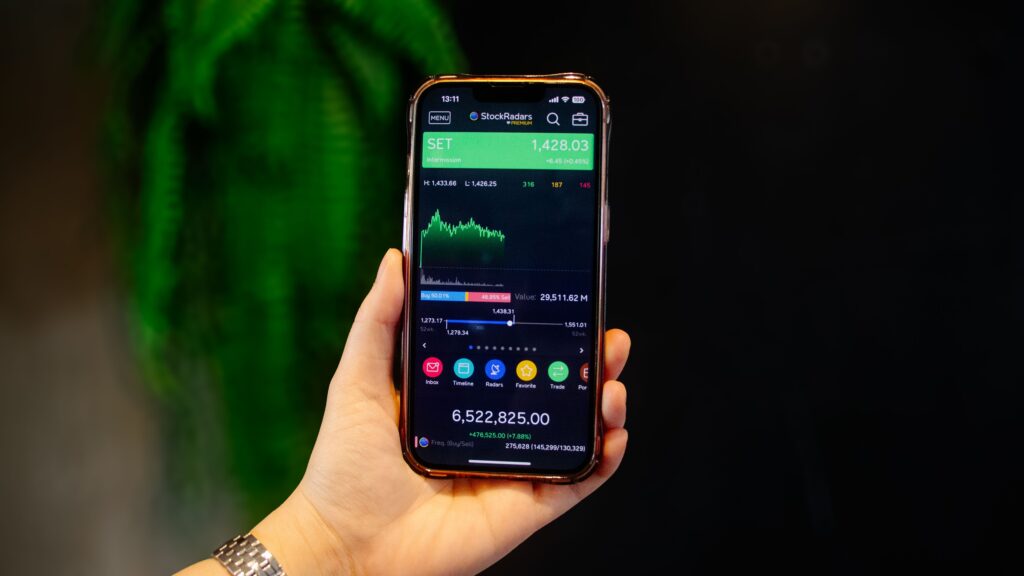
- Below the intro / near the title — A simple hero image showing a growth chart or a person reviewing investments on a laptop/phone. Sets the tone as approachable, not intimidating.
- Under “What Is an Index Fund?” — A simple infographic/diagram showing an index fund as a “basket” holding small pieces of many company logos or icons (illustrating diversification visually).
- Under “Index Funds vs. Active Mutual Funds” — A bar chart or comparison graphic showing expense ratio differences (e.g., 0.03% vs. 1%) and the SPIVA underperformance statistic (79% of active funds underperforming).
- Under “How to Invest in Index Funds” — A simple numbered-step graphic (1. Open account → 2. Choose allocation → 3. Automate deposits) for scannability.
- Under “Best Index Funds to Consider” — A comparison table graphic showing S&P 500 vs. Total Market vs. International index fund characteristics.
- Near the Real-Life Example (Sarah’s story) — An illustrative image of DCA in action, e.g., a simple line/bar chart showing consistent monthly investments across rising and falling markets.
- Near the FAQ section — Optional: a simple “FAQ” banner graphic or icon set to visually break up the section.
Internal Linking Suggestions
Link out to other relevant articles/pages on your site where they naturally fit:
- A dedicated article on “What Is Dollar-Cost Averaging (DCA) and How Does It Work?” — link from the “Real-Life Example” section
- A guide titled “Roth IRA vs. Traditional IRA: Which Should You Choose?” — link from “How to Invest in Index Funds”
- An article on “Understanding Expense Ratios: How Fees Eat Into Your Returns” — link from “Index Funds vs. Active Mutual Funds”
- A piece on “ETFs Explained: How They Work and Why They’re Popular” — link from the FAQ answer about ETFs vs. index funds
- A post on “How to Build a Simple 3-Fund Portfolio” — link from “Best Index Funds to Consider”
- A beginner’s guide like “How to Open Your First Brokerage Account” — link from “Step 1: Open a Brokerage Account”
- An article on “Understanding Market Corrections: Should You Panic When Stocks Drop?” — link from “Common Mistakes” (Mistake 1)