
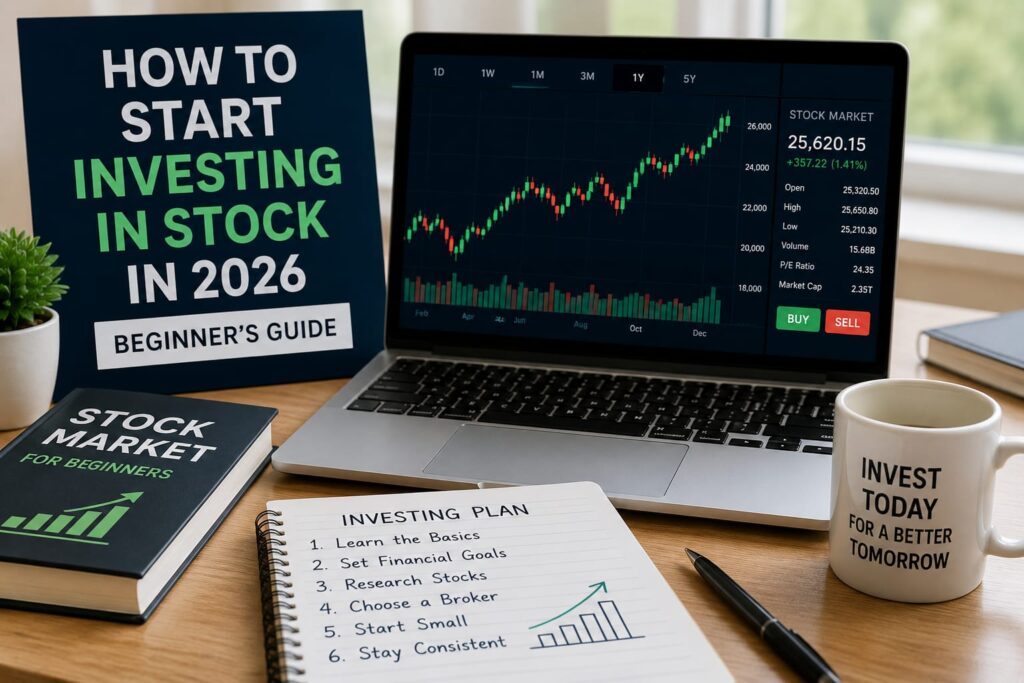
How to Start Investing in Stocks in 2026
A few years ago, I remember staring at a stock market app on my phone and feeling completely lost.
Everywhere I looked, people were talking about investing. Some were showing screenshots of huge profits. Others were warning that the market was about to crash. As a beginner, it felt like everyone knew something I didn’t.
If you’re looking for how to start investing in stocks in 2026, this guide will help you begin your journey step by step in a simple way.
So I did what many new investors do: I watched dozens of videos, read articles for weeks, and still hesitated to invest my first dollar.
Looking back, I wish someone had explained stock investing in a simple, practical way instead of making it sound like rocket science.
If you’re planning to start investing in stocks in 2026, this guide will help you avoid common beginner mistakes and take your first steps with confidence.
If you’re looking to start investing in stocks in 2026, you’re not alone. Millions of beginners are entering the stock market to build long-term wealth, generate passive income, and achieve their financial goals.
What Does Investing in Stocks Actually Mean?
When learning how to start investing in stocks in 2026, the first thing to understand is that buying a stock means purchasing a small piece of a company
For example, if you buy shares of companies like Apple, Microsoft, or Amazon, you become a partial owner of those businesses.
You won’t be making company decisions, of course, but if the company grows and becomes more valuable, your investment can grow too.
That’s the basic idea.
You are putting your money into businesses instead of letting it sit idle in a savings account.
How to Start Investing in Stocks in 2026
One thing I’ve noticed over the last few years is how easy investing has become.
In the past, investing often required phone calls, paperwork, and larger amounts of money.
Today, you can open an account from your smartphone in minutes.
Many platforms allow fractional shares, which means you don’t need hundreds or thousands of dollars to invest in expensive companies.
This accessibility is one reason why millions of new investors continue entering the market every year.
Step 1: Understand Your Goal Before Investing
Before opening an investment account, ask yourself a simple question:
Why are you investing?
Your answer matters because it affects every decision afterward.
Some common goals include:
Building retirement savings
Creating long-term wealth
Saving for a home
Generating passive income
Growing money faster than inflation
When I first started, I made the mistake of focusing only on making quick profits.
That mindset pushed me toward risky decisions.
Once I shifted my focus toward long-term growth, investing became much easier and less stressful.
Step 2: Build an Emergency Fund First
This step isn’t exciting, but it’s incredibly important.
Before investing heavily in stocks, try to have emergency savings available.
Unexpected expenses happen:
Medical bills
Car repairs
Job loss
Home emergencies
Without emergency savings, many people end up selling investments at the worst possible time.
A basic emergency fund covering several months of expenses can provide peace of mind and help you stay invested during market downturns.
Step 3: Learn the Difference Between Investing and Trading
Many beginners confuse investing with trading.
They’re not the same thing.
Investing
Investors buy quality assets and hold them for years.
The goal is long-term growth.
Trading
Traders buy and sell frequently, sometimes within days or even hours.
The goal is short-term profit.
One lesson I learned early was that trading looks much easier on social media than it actually is.
Many beginners lose money chasing fast gains.
For most people, long-term investing is usually the simpler and more reliable approach.
Step 4: Choose a Reliable Brokerage Platform
One important step in how to start investing in stocks in 2026 is choosing a reliable brokerage account.
Some popular platforms used by investors around the world include:
Robinhood
Fidelity
Charles Schwab
Interactive Brokers
Webull
eToro
The best platform depends on your country, fees, available assets, and personal preferences.
When comparing platforms, pay attention to:
Account fees
Trading commissions
Mobile app quality
Educational resources
Customer support
Security features
A clean, beginner-friendly app can make a huge difference when you’re just starting out.
Step 5: Start With Companies You Understand
One mistake many beginners make is investing in complicated businesses they don’t understand.
Instead, start by looking at companies whose products or services you already use.
For example:
Technology companies
Consumer brands
Retail businesses
Healthcare companies
Understanding how a company makes money helps you evaluate whether it’s a good investment.
If you can’t explain a company’s business model to a friend in simple language, you may need to research it further before investing.
Step 6: Consider Index Funds and ETFs
If I could go back and give my beginner self one piece of advice, it would be this:
Don’t feel pressured to pick individual stocks immediately.
Many experienced investors use index funds and ETFs.
These funds contain collections of stocks rather than a single company.
For example, an S&P 500 index fund gives exposure to hundreds of large companies at once.
Benefits include:
Instant diversification
Lower risk than single stocks
Less research required
Long-term growth potential
For many beginners, ETFs can be an excellent starting point.
Step 7: Invest Consistently Instead of Timing the Market
New investors often ask:
“When is the perfect time to invest?”
The truth is that nobody consistently predicts market movements.
I’ve seen people wait months for the “perfect opportunity” while the market continued moving higher.
A common strategy is called dollar-cost averaging.
Instead of investing one large amount, you invest smaller amounts regularly.
For example:
Weekly investments
Biweekly investments
Monthly investments
This approach reduces emotional decision-making and helps build investing discipline.
Step 8: Diversify Your Portfolio
Putting all your money into one stock can be risky.
Even strong companies can face unexpected challenges.
Diversification means spreading investments across multiple assets.
This might include:
Technology stocks
Healthcare stocks
Consumer companies
ETFs
International investments
Diversification doesn’t eliminate risk, but it helps reduce the impact of a single investment performing poorly.
Understanding Market Drops
One thing nobody told me when I started learning how to start investing in stocks in 2026 was that market declines are completely normal.
Market declines are normal.
At some point, your portfolio will probably go down.
Maybe 5%.
Maybe 10%.
Possibly more.
When that happened to me for the first time, I checked my portfolio constantly and considered selling everything.
Thankfully, I didn’t.
Historically, markets have experienced temporary declines many times while still producing long-term growth over decades.
Successful investors often understand that volatility is part of the process.
Common Beginner Mistakes to Avoid
- Investing Money You Need Soon
Avoid investing money needed for rent, bills, or short-term expenses.
Stock markets can fluctuate unpredictably.
- Following Social Media Hype
A stock becoming viral doesn’t automatically make it a good investment.
Always do your own research.
- Checking Prices Every Hour
Constant monitoring can lead to emotional decisions.
Long-term investing requires patience.
- Ignoring Fees
Small fees can add up over time.
Always understand platform costs before investing.
- Panic Selling During Market Drops
Many beginners sell when prices fall and buy when prices rise.
This is often the opposite of what successful investors do.
A Simple Example of Starting With $100
Let’s say you have $100 available to invest.
A beginner-friendly approach might look something like:
$70 into a broad-market ETF
$20 into a large established company
$10 kept as cash for future opportunities
The exact numbers will vary depending on your goals and risk tolerance.
The important thing is starting with an amount you’re comfortable investing.
You do not need thousands of dollars to begin.
Useful Tools for Beginner Investors
Several tools can help simplify investing:
Yahoo Finance
Useful for checking stock prices, company news, and financial information.
TradingView
Great for charts and market analysis.
Morningstar
Provides investment research and fund analysis.
Seeking Alpha
Offers market commentary and investment insights.
Brokerage Mobile Apps
Most major brokers now provide powerful apps for monitoring investments and placing trades.
These tools can help you make more informed decisions without overwhelming you.
How Much Money Should You Start With?
A question I hear frequently is:
“What’s the minimum amount needed when learning how to start investing in stocks in 2026?”
The answer is often less than people think.
Many platforms allow investments starting with very small amounts through fractional shares.
Whether you start with $50, $100, or $500, the habit of investing regularly matters more than the starting amount.
Consistency often beats occasional large investments.
What I Wish I Knew Earlier
If I had to summarize my biggest investing lesson, it would be this:
Building wealth is usually boring.
The internet loves dramatic stories about overnight gains.
Reality is different.
Most successful investors grow wealth slowly through patience, consistency, and good decision-making.
The people who quietly invest month after month often outperform those constantly chasing the next hot stock.
That lesson took me much longer to learn than I’d like to admit.
One common question from people learning how to start investing in stocks in 2026 is: which stocks should a beginner actually buy?
The honest answer is that there is no single perfect stock for everyone. However, there are some general categories that many beginners find easier to understand and less risky to start with.
Large, established companies are often a good starting point. These are businesses that have been around for decades, generate consistent revenue, and tend to be more stable during market downturns.
Index funds and ETFs remain one of the most recommended options for beginners. Instead of picking individual stocks, you get instant exposure to hundreds of companies at once.
Dividend-paying stocks are another option worth exploring. These companies pay you a small amount regularly just for holding their shares, which can feel rewarding when you are just starting out.
The most important thing when choosing your first investment is to start simple. Avoid complex financial products, penny stocks, and anything you do not fully understand.
Starting small and staying consistent will always matter more than finding the perfect stock on your first day.
Final Thoughts
How to Start Investing in Stocks in 2026
Starting your investing journey in 2026 doesn’t require a finance degree, insider knowledge, or a huge bank account.
What it does require is a willingness to learn, stay patient, and think long term.
Begin with clear goals, use a trusted brokerage, invest consistently, and avoid emotional decisions.
Your first investment probably won’t make you rich overnight—and that’s perfectly fine.
The real power of investing comes from giving your money time to grow.
Years from now, you’ll likely be far more grateful that you started early than worried about whether you picked the perfect stock on your first day.